- Complete Medical Evaluation
Fertility Diagnosis & Testing: Your First Step Towards Parenthood
Fertility diagnosis is a complete medical evaluation to identify why a couple is unable to conceive naturally. At Samarth IVF, we test both partners thoroughly including hormone blood tests, semen analysis, ultrasound, HSG, and genetic screening. Accurate diagnosis is the foundation of every successful fertility treatment. With clinics across Sambhajinagar, Bhopal, Dehradun, Jamnagar, and more, expert fertility evaluation is now accessible across India.
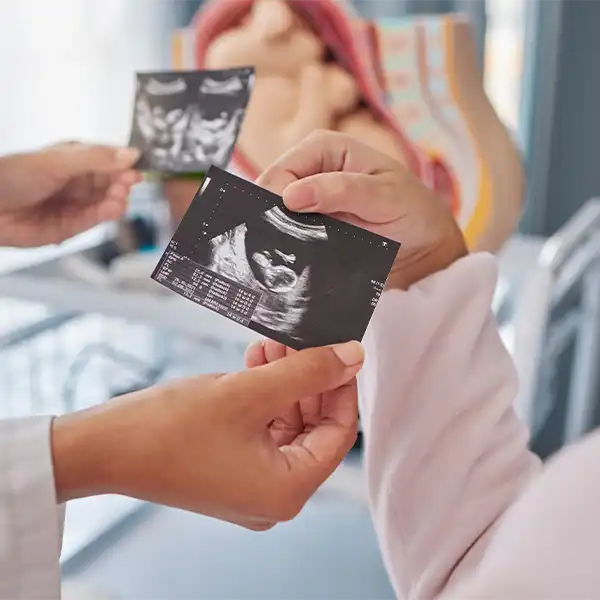

Accurate Diagnosis
Foundation of success
Why Getting the Right Fertility Diagnosis Changes Everything
Most couples who struggle to conceive try for months sometimes years without knowing what is actually preventing pregnancy.
Some are given treatments that do not match their diagnosis. Others are told everything is ‘normal’ when it is not.
This is where Samarth IVF is different. We do not guess. We test, evaluate, and diagnose with precision because the right treatment can only follow the right diagnosis.
Fertility is a shared responsibility between both partners. At Samarth IVF, both the female and male partner are evaluated from day one simultaneously. This saves weeks of time and ensures nothing is missed.
When Should You See a Fertility Specialist?
General medical guidelines recommend seeking a fertility evaluation based on age and circumstance:
Under 35 years
After 12 months of regular unprotected intercourse with no pregnancy.
Age 35–40
After 6 months of trying without success.
Above 40 years
Consult immediately. Do not wait.
Seek evaluation sooner – regardless of age if you have any of the following: irregular or absent periods, known PCOS or endometriosis, recurrent miscarriages (two or more), history of pelvic surgeries or infections, known thyroid disorder, or if the male partner has had testicular injury, infection, surgery, or previous low sperm count results.
Infertility Is Not Just a Female Problem
This is one of the most important and most misunderstood facts in reproductive medicine.
40–50%
Statistically, male factors contribute to 40–50% of all infertility cases.
30–40%
Female factors account for 30–40%.
10–20%
The remaining 10–20% involve combined factors or unexplained infertility.
Despite this, many couples spend months on female-focused treatments while the male partner goes completely untested.
At Samarth IVF, we evaluate both partners together always.
Your First Consultation at Samarth IVF:What Happens
Your fertility journey begins with a detailed one-on-one consultation with a Samarth IVF specialist. This is not a 10-minute appointment. It is a focused, in-depth review of your reproductive history, lifestyle, medical background, and goals. Everything discussed here directly shapes your diagnostic plan.
Medical History Review - Female Partner
Your doctor will ask about your menstrual cycle – its regularity, length, flow intensity, and any associated pain. Painful periods are a known warning sign for endometriosis.
The history also covers previous pregnancies or miscarriages, history of pelvic infections or STIs, previous pelvic or abdominal surgeries, and any diagnosed conditions such as PCOS, thyroid disorders, or uterine fibroids.
Medical History Review - Male Partner
For the male partner, history includes previous genital infections, undescended testes in childhood, scrotal surgeries or hernia repair, use of anabolic steroids or testosterone supplements, occupational exposure to chemicals, radiation, or prolonged heat, and lifestyle habits such as smoking, alcohol use, and physical activity.
All of these directly affect sperm production and quality.
Physical Examination
A physical examination is performed for both partners. For women, a pelvic examination checks for anatomical abnormalities, signs of hormonal imbalance, or infection.
For men, a scrotal and genital examination can identify varicoceles, absence of the vas deferens, or testicular abnormalities.
BMI is assessed for both, as weight directly influences hormonal balance and treatment response.
- For Women
Complete Fertility Tests for Women
at Samarth IVF
Female fertility evaluation examines your hormonal environment, egg reserve, reproductive anatomy, and uterine health. Each test answers a specific question and together they build a complete picture of your fertility.
Hormone Blood Tests
Blood tests are performed on Day 2 or Day 3 of the menstrual cycle.
Key hormones include FSH (ovarian reserve marker), LH (ovulation function, PCOS indicator), Estradiol (E2), AMH (most reliable egg reserve marker, can be done any day), Prolactin (elevated levels suppress ovulation), TSH/Thyroid Profile (thyroid disorders impair fertility significantly), and Testosterone/DHEAS (confirms PCOS and adrenal involvement).
AMH Test - Ovarian Reserve
AMH is produced by small follicles and reflects the number of eggs remaining. Normal range: 1.0-3.5 ng/mL.
Low AMH (below 1.0) indicates diminished reserve. High AMH (above 3.5) may suggest PCOS.
AMH can be tested any day of the cycle.
Antral Follicle Count (AFC)
A Day 2-3 transvaginal ultrasound counts resting follicles in both ovaries. Normal AFC: 8-15 total.
Fewer than 5-7 follicles suggests diminished reserve.
HSG — Fallopian Tube Test
An X-ray procedure where contrast dye is injected through the cervix. Open tubes allow dye to flow through; blocked tubes stop the dye. HSG also outlines the uterine cavity to detect polyps, fibroids, or septa.
Done between Day 7-10 of the cycle.
Pelvic Ultrasound (Transvaginal)
Evaluates the uterus for fibroids, polyps, adenomyosis, and structural abnormalities. Assesses ovaries for polycystic appearance, cysts, endometriomas, and masses.
Ovulation Tracking
Serial ultrasound scans track follicle growth and confirm egg release. Especially useful before IUI or timed intercourse cycles.
Day 21 Progesterone Test
A progesterone level above 30 nmol/L on Day 21 confirms ovulation occurred. Simple but direct confirmation of egg release.
Saline Infusion Sonography (SIS)
Sterile saline fills the uterine cavity during ultrasound for precise detection of polyps, submucous fibroids, uterine septa, and adhesions.
Diagnostic Hysteroscopy
Direct visual examination inside the uterine cavity via a thin camera through the cervix.
Polyps and small fibroids can often be treated in the same sitting.
Diagnostic Laparoscopy
A progesterone level above 30 nmol/L on Day 21 confirms ovulation occurred. Simple but direct confirmation of egg release.
Genetic & Immunological Testing
Includes chromosomal karyotyping, thrombophilia screening, antiphospholipid antibody testing, and NK cell activity testing for recurrent miscarriage or failed IVF cycles.
- For Men
Complete Fertility Tests for Men
at Samarth IVF
Male fertility evaluation is simpler but equally critical. Modern male fertility assessment goes well beyond basic semen analysis.
Semen Analysis
Evaluates sperm count (≥16 million/mL normal), motility (≥42% motile), morphology (≥4% normal forms by Kruger strict criteria), volume (1.4-6 mL), and liquefaction/pH.
Based on WHO 2021 reference values.
Sperm DNA Fragmentation Index (DFI)
Measures DNA damage inside sperm. High DFI (above 25-30%) causes fertilisation failure, poor embryo development, and recurrent miscarriage even when standard parameters appear normal.
Hormone Testing — Male
Measures DNA damage inside sperm. High DFI (above 25-30%) causes fertilisation failure, poor embryo development, and recurrent miscarriage even when standard parameters appear normal.
Scrotal Ultrasound
Identifies varicoceles, the single most common correctable cause of male infertility, found in 35-40% of infertile men.
Also detects testicular masses or absent vas deferens.
Genetic Testing - Male
Chromosomal karyotyping, Y-chromosome microdeletion testing, and cystic fibrosis gene mutation testing for men with azoospermia or severe oligospermia.
Testicular Biopsy / Surgical Sperm Retrieval (TESA/PESA)
For men with zero sperm in ejaculate (azoospermia). Determines whether sperm are present in the testes.
If found, sperm are retrieved for ICSI, giving azoospermic men a chance at biological fatherhood.
Your Fertility Diagnosis: Understanding What the Results Mean
Low Ovarian Reserve
Low AMH and AFC indicate fewer eggs than expected for age. Treatment can be optimised with carefully designed stimulation protocols.
Egg donation offers 50–60% success rates per transfer in advanced cases.
Blocked Fallopian Tubes
One or both blocked tubes prevent natural conception. Treatment options include tubal surgery (select cases) or IVF, which bypasses the tubes completely.
PCOS
The most common hormonal disorder in Indian women, affecting 1 in 5. Causes irregular ovulation.
Highly manageable with lifestyle changes, ovulation induction, IUI, or IVF.
Male Factor Infertility
Low count, poor motility, abnormal morphology, or high DNA fragmentation.
Treatment ranges from lifestyle changes for mild cases to ICSI for severe cases.
Even azoospermic men may father children via surgical sperm retrieval + ICSI.
Unexplained Infertility
Normal test results with no pregnancy affects 10–20% of couples.
At Samarth IVF, we investigate further with advanced testing – not stopping at basic panels.
Accessing Your Fertility Diagnosis Across Our India Locations
Samarth IVF delivers world-class IVF and ICSI treatment across 14 centres in India. Our full-service IVF centres are equipped with advanced embryology laboratories, stimulation monitoring, egg retrieval suites, embryo transfer facilities, and vitrification programmes.
Sambhajinagar (Aurangabad), Maharashtra: Main HQ with full surgical and IVF facilities, plus 2 Level-1 Centres
Washim, Maharashtra | Buldhana, Maharashtra | Parbhani, Maharashtra | Omerga (Umarga), Maharashtra | Gondia, Maharashtra
Dehradun, Uttarakhand | Jamnagar, Gujarat | Kalaburagi (Gulbarga), Karnataka | Bhopal, Madhya Pradesh | Farrukhabad, Uttar Pradesh | Lucknow, Uttar Pradesh
Why Choose Samarth IVF
Internationally benchmarked success rates against global standards.
Personalised protocols tailored to ovarian reserve, age, and diagnosis.
Advanced embryology laboratory with state-of-the-art incubators & ICSI/IMSI.
Blastocyst culture as standard (Day 5 to 6) to select the best embryos.
Transparent counselling and honest discussion of costs and success probabilities.
Full range of advanced tech: PGT-A, PGT-M, ERA, LAH, IMSI available.
Why Choose Samarth IVF for Fertility Diagnosis
Both partners evaluated simultaneously — saving weeks and ensuring nothing is missed
Specialists trained in reproductive medicine — not general gynaecologists
Advanced in-house laboratory - semen analysis, hormone testing, and embryology under one roof
Honest, clear result explanations - every result explained in plain language
Personalised treatment planning - your diagnosis drives your treatment, always
Pan-India accessibility - 11 centres across 6 states with international standard care
- FAQ
FREQUENTLY ASKED QUESTIONS
The first tests recommended are a hormone blood panel (FSH, LH, AMH, prolactin, thyroid) and pelvic ultrasound for women, and a semen analysis for the male partner.
At Samarth IVF, both partners are tested simultaneously from the very first visit.
A complete fertility workup typically takes 2-4 weeks. Blood test and semen analysis results are available in 1-3 days.
HSG is scheduled between Day 7-10 of the cycle. Advanced tests such as genetic testing or laparoscopy may require additional time.
Most women experience mild to moderate cramping during HSG - similar to period cramps - lasting only during the 15-20 minute procedure.
A mild pain reliever taken 30-60 minutes before helps. Most women return to normal activity the same day.
Not comprehensively. Blood tests assess hormonal balance, ovarian reserve, ovulation, thyroid function, and prolactin - none of which can be evaluated through physical examination or ultrasound alone.
Normal results with no pregnancy is called unexplained infertility, affecting 10-20% of couples.
At Samarth IVF, we investigate further with sperm DNA fragmentation, endometrial receptivity analysis, immunological testing, and diagnostic laparoscopy.
No. Low AMH means ovarian reserve is lower than expected - but pregnancy is still possible.
Many women with low AMH conceive with the right protocol.
In advanced cases, egg donation offers 50-60% success rates per transfer.
Not always. Standard analysis does not detect DNA damage. High DNA fragmentation causes fertilisation failure, poor embryo quality, and recurrent miscarriage even with normal count and motility.
DNA fragmentation testing is recommended for unexplained infertility or repeated IVF failure.
Yes. Complete fertility diagnosis - hormone tests, semen analysis, ultrasound, AFC, and AMH - is available at all Samarth IVF centres including Sambhajinagar, Washim, Buldhana, Parbhani, Gondia, Bhopal, Farrukhabad, Dehradun, Jamnagar, and Kalaburagi.
Basic fertility testing typically ranges from ₹3,000-₹15,000 for a complete initial panel.
Samarth IVF provides complete cost transparency at the first consultation - no hidden charges, no unnecessary tests.
Yes. Secondary infertility is common. Ovarian reserve declines with age, and new conditions can develop.
A full evaluation is recommended after 12 months of trying for a subsequent pregnancy (6 months if the woman is over 35).