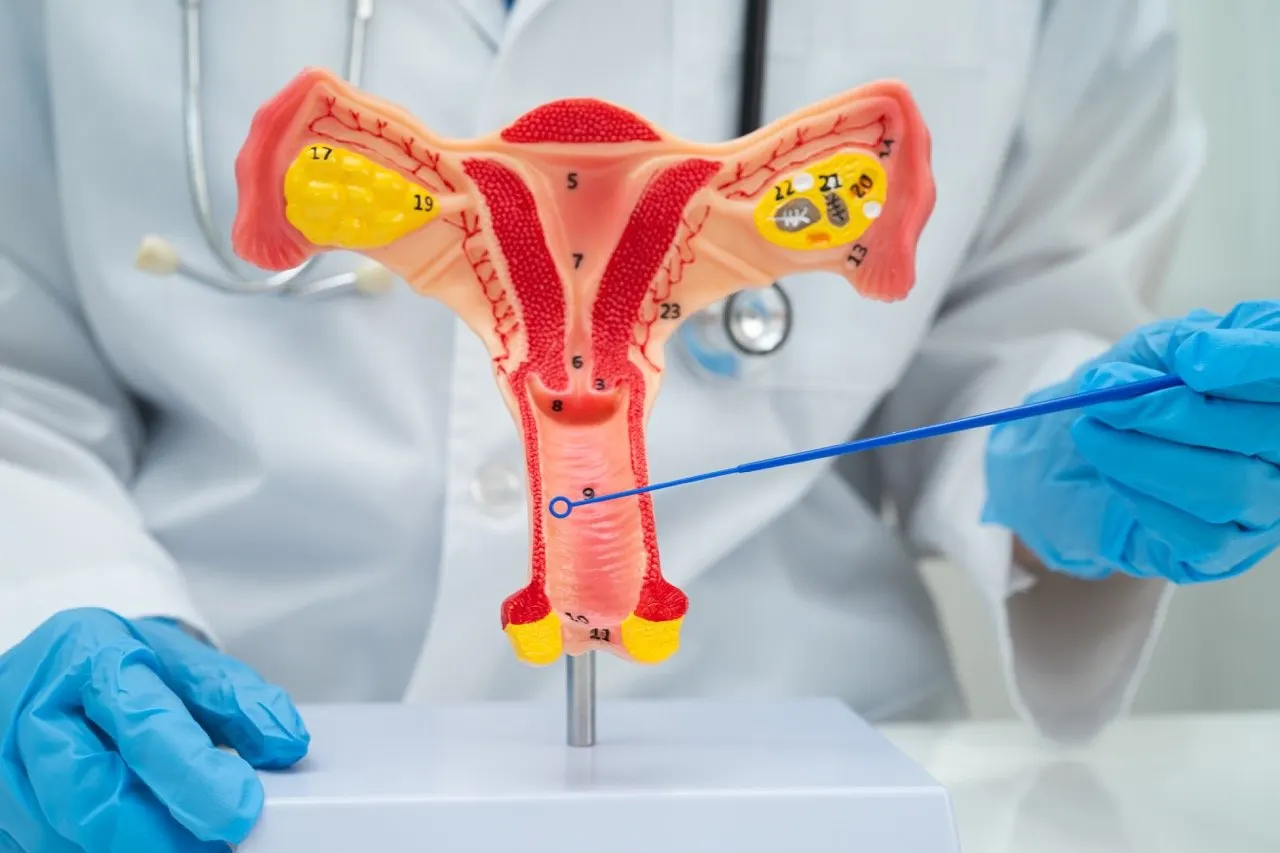
IUI stands for Intrauterine Insemination. It is a form of assisted reproduction in which a specially prepared sample of sperm is introduced directly into the uterine cavity through a thin, flexible catheter passed through the cervix. The procedure is timed precisely to coincide with ovulation, when the egg is released from the ovary and is available for fertilisation.
IUI differs from natural conception in two important ways. First, the sperm bypasses the cervix entirely, eliminating the natural barrier that filters out large numbers of sperm and is the point of failure in cervical factor infertility. Second, sperm preparation in the laboratory selects and concentrates the most active, forward-swimming sperm from the ejaculate, dramatically increasing the quality and concentration of sperm reaching the fallopian tube where fertilisation occurs.
IUI is not IVF. Fertilisation still occurs naturally inside the fallopian tube. The egg is not removed from the body, and there is no laboratory creation of an embryo. IUI is a less invasive, less costly, and simpler procedure than IVF, making it an appropriate first-line treatment in well-selected couples before advancing to more intensive assisted reproduction.