PCOS Diet for Fertility: An Indian Food Guide to Support Ovulation
Diet cannot cure PCOS, but steady blood sugar and balanced meals can support ovulation and cycles. This guide shows what that looks like on an Indian plate, what to limit, and which diet myths to ignore.
 Samarth IVF team
8 min read
Food cannot cure PCOS, but what you eat can make cycles, ovulation and treatment easier to manage. This guide explains why food matters in PCOS, what a supportive eating pattern looks like on an Indian plate, what to limit, and which popular diet claims to ignore.
The Short Answer
What to Know There is no single "PCOS diet", but eating patterns that keep blood sugar steady and support a healthy weight can help cycles, ovulation and treatment response. Focus on whole grains, pulses, vegetables, protein at each meal and healthy fats, and limit refined carbohydrates, sugary drinks, sweets and packaged snacks. Avoid crash diets and fads. Diet works alongside medical treatment, not instead of it.
मराठीत थोडक्यात: PCOS साठी कोणताही एकच आहार नसतो, पण रक्तातील साखर स्थिर ठेवणारा आणि निरोगी वजनाला आधार देणारा आहार पाळी, ओव्हुलेशन आणि उपचारांना मदत करू शकतो. संपूर्ण धान्ये, डाळी, भाज्या, प्रत्येक जेवणात प्रथिने आणि चांगले फॅट्स यावर भर द्यावा; पॉलिश केलेला भात, मैदा, साखरयुक्त पेये आणि गोड पदार्थ कमी करावेत. क्रॅश डाएट आणि उपवासाचे प्रयोग टाळावेत. आहार हा वैद्यकीय उपचारांना पर्याय नाही, तर त्यांना पूरक आहे.
हिंदी में संक्षेप: PCOS के लिए कोई एक तय डाइट नहीं होती, लेकिन ब्लड शुगर को स्थिर रखने और स्वस्थ वज़न में मदद करने वाला आहार पीरियड्स, ओवुलेशन और इलाज में मदद कर सकता है। साबुत अनाज, दालें, सब्ज़ियाँ, हर भोजन में प्रोटीन और अच्छे फैट पर ध्यान दें; पॉलिश्ड चावल, मैदा, मीठे पेय और मिठाइयाँ कम करें। क्रैश डाइट और उपवास के प्रयोगों से बचें। आहार चिकित्सा उपचार का विकल्प नहीं, बल्कि उसका सहयोगी है।
Why Food Matters in PCOS
Many, though not all, women with PCOS have some degree of insulin resistance, which means the body needs more insulin to keep blood sugar in range. Higher insulin levels can push the ovaries to make more male-type hormones, which can disturb ovulation and cause irregular periods. Food affects blood sugar and insulin, which is why eating patterns can make a difference.
PCOS is a varied condition, and food is one part of managing it. Our guide to PCOD vs PCOS explains the condition, and PCOS and IVF explains treatment options.
The Basic Principles
- Steady blood sugar — Meals that release sugar slowly avoid sharp rises and falls.
- Protein and fibre at every meal — They keep you full and slow the rise in blood sugar.
- Whole grains instead of refined — Whole wheat, jowar, bajra and ragi release sugar more slowly than polished rice or maida.
- Healthy fats in sensible amounts — Nuts, seeds and cooking oils used moderately are part of a balanced plate.
- Regular meals — Long gaps followed by large meals can cause blood sugar swings.
- Enough water — Water is a better everyday drink than sweetened beverages.
- A pattern, not a perfect rule — A way of eating you can keep up for months is worth more than a strict plan you abandon.
What This Looks Like on an Indian Plate
This table gives ideas, not a prescription. A dietitian can tailor it to your health, preferences and religious or family food habits.
| Meal | Often helpful | Often worth limiting |
|---|---|---|
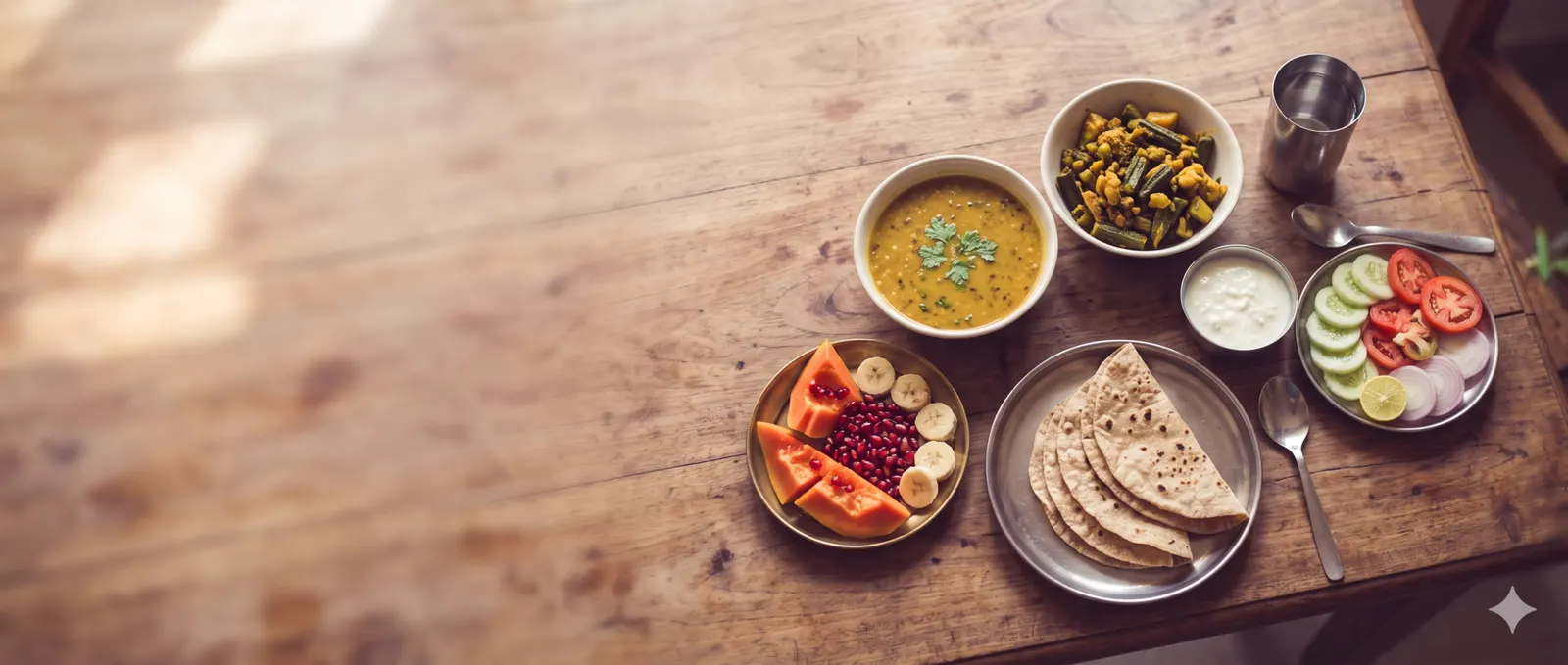
| Breakfast | Vegetable poha, moong dal cheela, besan chilla, dalia, idli with sambar, paneer or egg dishes | Maida parathas, sweetened cereals, bread with jam, very sweet chai |
| Lunch and dinner | Whole wheat or mixed millet rotis, dal, vegetables, salad, curd | Large portions of white rice, naan, fried items, heavy gravies |
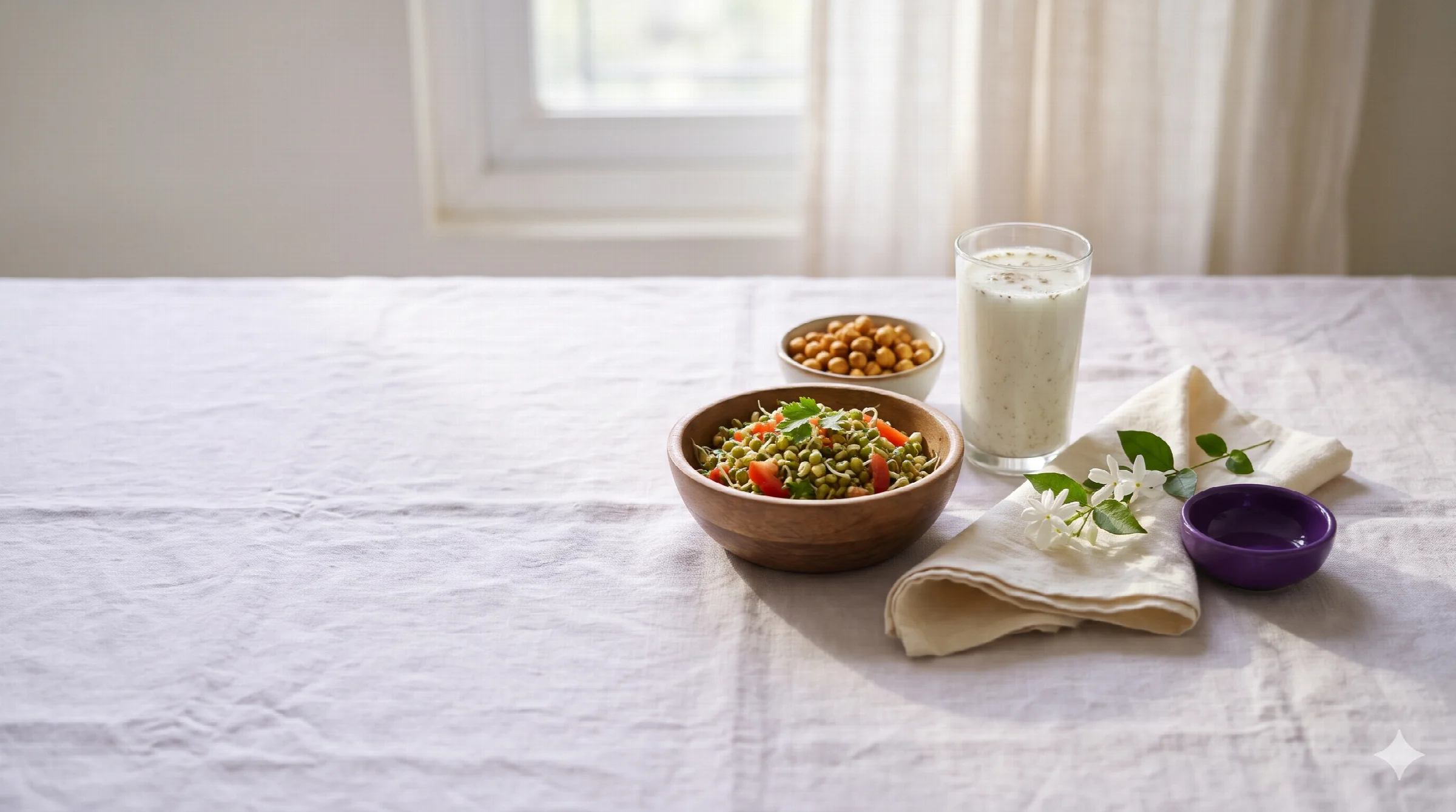
| Snacks | Roasted chana, nuts, sprouts chaat, whole fruit with curd, buttermilk | Namkeen, biscuits, mithai, deep-fried snacks |
| Drinks | Water, buttermilk, unsweetened tea | Soft drinks, packaged juices, energy drinks, sweetened chai |
Our guide to the fertility diet for women shows more everyday meal ideas for fertility.
Practical Tips You Can Start With
- Start a meal with salad or dal — This slows how fast the rest of the meal is absorbed.
- Pair carbohydrates with protein — Add curd, dal, paneer, sprouts or eggs to rotis and rice.
- Do not skip breakfast — A protein-rich start helps steady the day.
- Choose whole fruit over juice — Whole fruit contains fibre that juice lacks.
- Watch portions of rice and sweets — You do not need to give them up, but portion size matters.
- Enjoy festivals mindfully — A festive meal is fine, and an ordinary routine the next day matters more than one occasion.
Weight, Lean PCOS and Insulin Resistance
If you are above a healthy weight, modest weight loss can help ovulation return for many women, but it is not necessary for everyone. PCOS also occurs in lean women, and for them the focus should be on the pattern of eating, not on losing weight. Crash diets can disturb your cycle even more. See weight and fertility and how to approach weight loss safely before trying to conceive.
Movement and Sleep Matter Too
Regular movement helps the body use insulin better, and good sleep supports hormone balance. You do not need extreme workouts. Our guides to exercise and fertility and yoga for fertility explain what is helpful.
Supplements: Talk to Your Doctor First
- Vitamin D and vitamin B12 — Deficiencies are widely reported in India, and vegetarians in particular should check B12. Test first, then correct what is low.
- Folic acid — Recommended before conception. See folic acid and fertility vitamins.
- Inositol — Some specialists discuss it for PCOS, but the evidence is still evolving, so decide with your doctor.
- Herbal teas, powders and remedies — Many are marketed for PCOS, but reliable evidence is limited and some can interfere with treatment. Tell your doctor about everything you take. See fertility tablets for women.
Eating During Fertility Treatment
If you are having ovulation induction, IUI or IVF, continue a balanced diet and follow your clinic's guidance. Avoid crash dieting during treatment. Women with PCOS can respond strongly to stimulation, so your doctor monitors you closely. See ovarian hyperstimulation syndrome for what to watch for.
What to Avoid
- Crash diets and extreme calorie cutting — They can worsen cycle irregularity.
- Long fasts or skipping meals — These can cause blood sugar swings.
- Cutting out entire food groups without advice — This can lead to nutrient gaps.
- Detox teas and miracle PCOS powders — They are not backed by reliable evidence.
- Unregulated supplements — Always check with your doctor first.
Common Myths About the PCOS Diet
- Myth: "You must give up rice and roti completely." — You do not need to. The type of grain and the portion size matter more than avoiding them altogether.
- Myth: "Only overweight women get PCOS." — PCOS also occurs in lean women, and diet still plays a role for them.
- Myth: "A PCOS diet can cure PCOS." — Diet helps manage symptoms, but PCOS is a long-term condition that may also need medical treatment.
- Myth: "Skipping meals or fasting helps." — Long gaps can cause blood sugar swings and often lead to overeating later.
- Myth: "Detox teas and powders fix hormones." — There is no reliable evidence for this.
When to See a Doctor
If your periods are irregular, if you are trying to conceive without success, or if you have symptoms such as excess hair growth or acne, speak to a doctor. A fertility specialist can confirm the diagnosis and check whether ovulation is happening, and a dietitian can build a plan that suits you. See irregular periods and pregnancy and follicular study for how ovulation is checked.
Frequently Asked Questions
Which diet is recommended for PCOS?
There is no single PCOS diet. Patterns that keep blood sugar steady, with whole grains, pulses, vegetables, protein at each meal and limited refined carbohydrates and sugary drinks, are generally advised.
Can I eat rice with PCOS?
Yes, in sensible portions. Pair it with dal, vegetables and curd, and consider switching part of your grains to whole grains or millets.
Can diet help me ovulate?
Steady blood sugar and a healthy weight can support ovulation for many women with PCOS, but diet may not be enough on its own. Your doctor can advise on treatment.
Do I have to lose weight to get pregnant with PCOS?
Not always. Modest weight loss can help ovulation in women who are above a healthy weight, but PCOS also occurs in lean women, and your doctor will advise you.
Is sugar bad for PCOS?
Large amounts of sugar and sweetened drinks can cause sharp rises in blood sugar, so they are worth limiting. You do not need to ban sweets entirely.
Are millets good for PCOS?
Millets such as jowar, bajra and ragi are whole grains that release sugar more slowly than refined grains, so they fit well into a balanced PCOS diet.
Can I eat fruit with PCOS?
Yes. Whole fruit contains fibre, and it is generally better than juice. Pair it with curd or nuts if you like.
Should I fast or skip meals for PCOS?
Long fasts and skipped meals can cause blood sugar swings, so regular meals are generally better. Please speak to your doctor before trying any fasting plan.
This article is for general education only and is not a substitute for a medical consultation. Suitability and response to any treatment vary between individuals.