Healthy Fats and Fertility: Ghee, Cooking Oils, Nuts and Seeds in an Indian Kitchen
Is ghee good or bad when trying to conceive? Which cooking oil should you use? This guide explains how healthy fats and fertility are linked for women and men, which fats to enjoy and which to limit, how to use ghee, oils, nuts and seeds sensibly in Indian cooking, why reused frying oil matters, and what the evidence says about seed cycling and supplements.
 Samarth IVF team
10 min read
In many Indian homes, a spoon of ghee on hot rotis is a sign of love, and a hopeful couple may be told to eat "more ghee for strength". Others are warned that all fat is bad and should be cut out. Neither extreme is right. Healthy fats and fertility are closely linked, because the body uses fats to make hormones and to build healthy cells, including eggs and sperm. The type of fat matters more than avoiding fat altogether. This guide explains which fats to enjoy, which to limit, and how to cook sensibly in an Indian kitchen while trying to conceive.
The Short Answer
What to Know
- Fat is not the enemy. The body needs some fat to make hormones and healthy cells.
- Fats from nuts, seeds, fish and plant oils are linked with better overall and reproductive health.
- Trans fats from vanaspati, reused frying oil and many bakery and packet snacks should be limited as much as possible.
- Ghee can be part of a balanced diet in small amounts, but more is not better for fertility.
- These changes help both partners, as fats affect sperm health too.
मराठीत थोडक्यात: चरबी पूर्णपणे टाळण्याची गरज नाही. शरीराला हार्मोन्स तयार करण्यासाठी काही चरबी लागते. सुकामेवा, बिया आणि वनस्पती तेलातील चांगली चरबी उपयोगी ठरते, पण वनस्पती तूप, पुन्हा वापरलेले तळणीचे तेल आणि बेकरीचे पदार्थ कमी करा. तूप थोड्या प्रमाणात चालते, जास्त खाल्ल्याने फायदा होत नाही.
हिंदी में संक्षेप: चर्बी को पूरी तरह छोड़ने की ज़रूरत नहीं है। शरीर को हार्मोन बनाने के लिए कुछ चर्बी चाहिए। मेवे, बीज और वनस्पति तेल की अच्छी चर्बी फ़ायदेमंद है, लेकिन वनस्पति घी, बार-बार इस्तेमाल किया तलने का तेल और बेकरी के सामान कम करें। घी थोड़ी मात्रा में ठीक है, ज़्यादा खाने से फ़ायदा नहीं होता।
Healthy Fats and Fertility at a Glance
| Question | Short answer |
|---|---|
| What this covers | How different fats affect hormones, eggs and sperm, and how to choose fats in Indian cooking |
| Who it is for | Couples trying to conceive, couples preparing for IVF, and anyone confused about ghee and oils |
| The most important message | Choose better fats rather than avoiding fat, and limit trans fats and reused oil |
| A first step | Stop reusing frying oil at home, and add a small handful of nuts or seeds to your day |
| Where to get help | Your doctor, a dietitian, or the Samarth IVF contact page |
Why Fats Matter for Fertility
Fats do important work in the body. Hormones such as estrogen, progesterone and testosterone are made from cholesterol, a type of fat. Every cell, including eggs and sperm, is wrapped in a layer made partly from fats. Some fats also help the body absorb vitamins such as A, D, E and K.
Research suggests that diets rich in unsaturated fats, such as those in nuts, seeds, fish and plant oils, are linked with better ovulation and healthier sperm. Diets high in trans fats are linked with poorer fertility in both women and men. Our guide on fertility diet for women explains what the wider research supports, and our article on improving male fertility naturally covers men.
Know Your Fats
This table is the heart of this guide. It explains the main types of fat in plain words, where they are found in an Indian kitchen, and how to use them.
| Type of fat | Where you find it | What the research suggests | How to use it |
|---|---|---|---|
| Omega-three fats | Walnuts, flaxseed, chia seeds, mustard oil, fish such as sardines and mackerel | Linked with healthier sperm and may support hormone balance | Include a source most days, such as a spoon of flaxseed or a few walnuts |
| Other unsaturated fats | Groundnuts, almonds, sesame, groundnut oil, rice bran oil, olive oil, avocado | Linked with better overall and reproductive health | Use as your main cooking fats, and rotate between a few oils |
| Saturated fats | Ghee, butter, cream, coconut oil, full-fat paneer, fatty meat | Fine in small amounts, but large amounts may affect weight and blood sugar | Keep portions small, such as a little ghee on dal or roti |
| Trans fats | Vanaspati, reused frying oil, many biscuits, bakery items, fried street snacks and packet snacks | Linked with poorer fertility and heart health | Limit as much as possible, and avoid reusing oil |
Ghee: Friend or Foe?
Ghee is part of many family traditions, and you do not need to give it up. A small amount adds flavour and can be part of a balanced diet. But extra ghee does not boost fertility, and large amounts add many calories, which can lead to weight gain. Weight changes can affect ovulation and sperm, as our guides on weight and male fertility and safe weight loss before trying to conceive explain.
If you have PCOS or insulin resistance, watching total fat and calories alongside sugar is especially helpful. Our PCOS diet guide and our article on sugar and fertility explain how to balance meals.
Cooking Habits That Make a Difference
- Do not reuse frying oil. Heating oil again and again creates harmful compounds, including trans fats. Use fresh oil, and fry less often.
- Rotate your oils. Using a few different oils, such as mustard, groundnut and rice bran, gives a wider mix of healthy fats.
- Measure, do not pour. Use a spoon rather than pouring straight from the bottle, so you know how much oil goes in.
- Choose cooking methods wisely. Steaming, roasting, grilling and light sautéing need less oil than deep frying.
- Read labels. Words like "partially hydrogenated" or "vanaspati" mean trans fats.
- Watch outside food. Street and restaurant food often uses reused oil. Our guide on street food while trying to conceive has practical tips.
Nuts and Seeds: Small Portions, Big Help
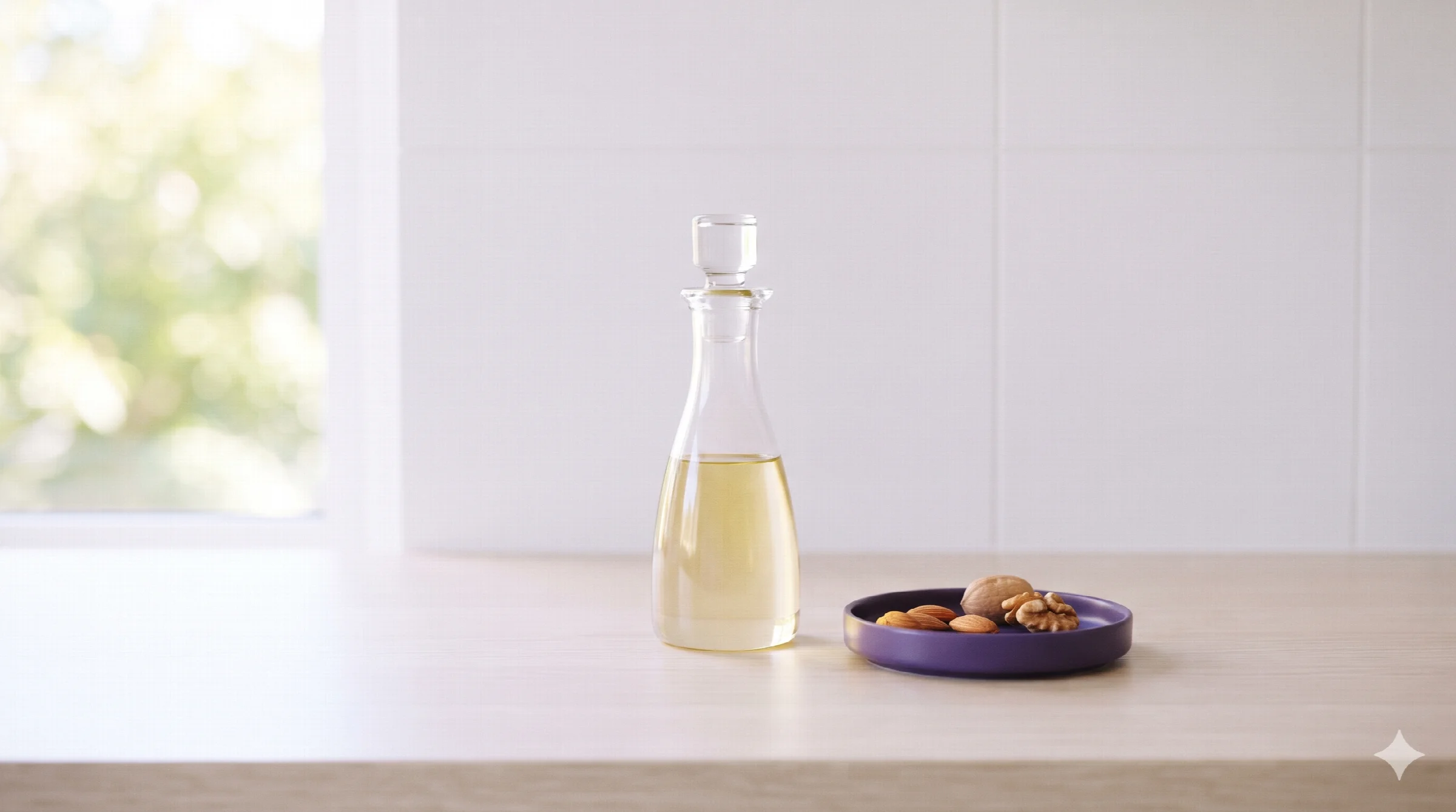
A small handful of nuts or a spoon of seeds is an easy way to add healthy fats, protein and minerals. Walnuts, almonds, groundnuts, flaxseed, sesame, pumpkin and sunflower seeds can be eaten as snacks, sprinkled on curd or poha, or ground into chutneys and laddoos with less sugar. For vegetarian families, these are especially useful sources of good fats. Our guides on vegetarian IVF diet and protein for fertility have more ideas.
You may hear about "seed cycling", which means eating certain seeds in different parts of the menstrual cycle to balance hormones. There is little scientific evidence for this practice. The seeds themselves are healthy foods, so enjoying them every day is a sensible approach.
Option A: Change gradually through food Start with two simple changes, such as stopping the reuse of frying oil and adding a handful of nuts or seeds to your day. Then rotate cooking oils and cut down on bakery and packet snacks. Our guide on what to eat at each stage of IVF shows how these choices fit into a full diet.
Option B: Ask about supplements if your diet is limited If you do not eat fish, nuts or seeds, or have special dietary needs, ask your doctor or dietitian whether a fish oil or plant-based supplement makes sense for you. The evidence on these supplements for fertility is mixed, so food remains the first choice. Our articles on whether sperm supplements work and vitamins before pregnancy explain how to think about supplements.
Worth Remembering
- The body needs some fat to make hormones and healthy cells.
- Nuts, seeds, fish and plant oils are good sources of healthy fats.
- Trans fats from vanaspati, reused oil and bakery snacks should be limited.
- Ghee is fine in small amounts, but more does not boost fertility.
- Healthy fat choices help both partners.
Myths and Facts
| Myth | Fact |
|---|---|
| All fat is bad and should be cut out when trying to conceive | The body needs some fat for hormones. The type of fat matters more than avoiding it |
| More ghee makes a woman more fertile and a man stronger | Small amounts are fine, but large amounts add calories and do not boost fertility |
| Reusing frying oil a few times is harmless | Reused oil forms harmful compounds, including trans fats, and should be avoided |
| Seed cycling balances hormones and improves fertility | There is little scientific evidence for seed cycling, though the seeds are healthy foods |
| Fish oil capsules are a must for every couple | The evidence on supplements is mixed. Food sources come first, and your doctor can advise if needed |
Warning signs: please see a doctor soon if you notice
- Rapid weight gain or loss that you cannot explain
- Periods that become very irregular or stop
- Ongoing tummy pain, oily or pale stools, or diarrhoea after fatty meals
- Feeling very tired, thirsty or passing urine often
- Chest pain or breathlessness. Please seek medical help straight away
Please do not start or stop any medicine on your own.
When to Speak to Your Doctor
Please speak to your doctor or a dietitian if:
- You have PCOS, diabetes, high cholesterol or a family history of heart disease
- You are planning IVF and want a simple, personalised diet plan
- You follow a restricted diet and are unsure whether you need supplements
- You have digestive problems with fatty foods
- You want help reaching a healthy weight before trying to conceive
Our guides on diabetes and fertility, egg quality, millets and fertility and the preconception checklist can help you plan. You can find your nearest Samarth IVF centre on our centres page, or reach us through the contact page.
"Good food is not about fear of fat. It is about choosing the fats that care for you."
Frequently Asked Questions
Are healthy fats good for fertility? Yes. Unsaturated fats from nuts, seeds, fish and plant oils are linked with better ovulation and healthier sperm. They also help the body make hormones.
Is ghee good for fertility? Ghee can be part of a balanced diet in small amounts. It does not boost fertility, and large amounts add many calories.
Which cooking oil should we use when trying to conceive? Use unsaturated oils such as mustard, groundnut, rice bran or olive oil, and rotate between a few. Avoid vanaspati and reused frying oil.
Why is reused frying oil harmful? Heating oil again and again creates harmful compounds, including trans fats, which are linked with poorer health and fertility.
Do nuts and seeds help fertility? Nuts and seeds provide healthy fats, protein and minerals. A small handful a day is a simple, healthy habit for both partners.
Does seed cycling work? There is little scientific evidence for seed cycling. The seeds are healthy, so eating them regularly is sensible, but they do not need to be timed to your cycle.
Should I take fish oil supplements for fertility? The evidence is mixed. Food sources come first. Ask your doctor or dietitian if your diet is limited or you have special needs.
Do fats affect male fertility too? Yes. Trans fats are linked with poorer sperm health, while healthy fats from nuts, seeds and fish are linked with better sperm health.
This article is for general education only and is not a substitute for a medical consultation. Suitability and response to any treatment vary between individuals.