Pregnancy Diet After IVF: What to Eat in Each Trimester, Foods to Limit and Common Food Myths
After a long IVF journey, many families feel every bite now matters. This guide explains the pregnancy diet after IVF in plain words: what to eat in each trimester with simple Indian foods, which foods to limit or avoid, how to manage nausea and acidity, and which food myths you can safely let go of. An IVF pregnancy needs the same healthy plate as any other.
 Samarth IVF team
9 min read
After months or years of treatment, a positive pregnancy test after IVF brings joy, and often a flood of food advice. Family members may say to eat ghee by the spoonful, avoid papaya completely, or eat for two. Many couples worry that one wrong meal could harm a precious pregnancy. The good news is that the pregnancy diet after IVF is the same healthy, balanced diet recommended for every pregnancy. There is no special IVF menu. This guide explains what to eat in each trimester using familiar Indian foods, which foods to limit or avoid, and which common food myths you can let go of.
The Short Answer
What to Know
- An IVF pregnancy needs the same balanced diet as any other pregnancy: grains, dal and protein, vegetables, fruits, milk products and healthy fats.
- Eating for two does not mean eating double. Your needs rise slowly, mostly in the later months.
- Take the vitamins and iron your doctor prescribes, and do not add extra supplements on your own.
- Avoid raw or undercooked meat, fish and eggs, unpasteurised milk, alcohol and tobacco, and limit tea, coffee and very sugary foods.
- If you have diabetes, thyroid problems, twins or other conditions, your doctor or a dietitian may adjust your plan.
मराठीत थोडक्यात: आयव्हीएफनंतरच्या गर्भधारणेसाठी वेगळा आहार लागत नाही. धान्य, डाळ, भाज्या, फळे, दूध-दही आणि योग्य प्रमाणात तूप-तेल असलेला संतुलित आहार पुरेसा आहे. दोन माणसांचे जेवण करण्याची गरज नाही. डॉक्टरांनी दिलेली जीवनसत्त्वे घ्या आणि कच्चे मांस, अंडी, मद्य आणि तंबाखू टाळा.
हिंदी में संक्षेप: आईवीएफ के बाद की प्रेगनेंसी के लिए कोई अलग डाइट नहीं होती। अनाज, दाल, सब्ज़ियाँ, फल, दूध-दही और सही मात्रा में घी-तेल वाला संतुलित खाना काफ़ी है। दो लोगों के बराबर खाने की ज़रूरत नहीं है। डॉक्टर की दी हुई विटामिन लें और कच्चा मांस, अंडे, शराब और तंबाकू से बचें।
Pregnancy Diet After IVF at a Glance
| Question | Short answer |
|---|---|
| What this covers | The pregnancy diet after IVF in each trimester, foods to limit or avoid, common challenges and food myths |
| Who it is for | Women pregnant after IVF or IUI, their partners and families who cook for them |
| The most important message | An IVF pregnancy needs a normal, balanced pregnancy diet. There is no special IVF menu |
| A first step | Build each meal around a grain, a dal or protein, a vegetable and a milk product |
| Where to get help | Your obstetrician or a dietitian, or the Samarth IVF contact page |
Is an IVF Pregnancy Different?
Once the embryo has implanted and the pregnancy is growing, the baby develops in the same way as in any other pregnancy. Some IVF pregnancies need closer care, for example with twins, higher maternal age or conditions such as diabetes or thyroid problems. Our guide on whether pregnancy after IVF is high risk explains this, and our guide on pregnancy after IVF myths clears up common beliefs. For food, the message is reassuring: eat well, eat regularly and follow your doctor's advice.
What to Eat in Each Trimester
This table is the heart of this guide. It shows what is happening in each trimester, the food focus and simple Indian ideas. Your doctor may change this for your health needs.
| Trimester | What is happening | Food focus | Simple Indian food ideas |
|---|---|---|---|
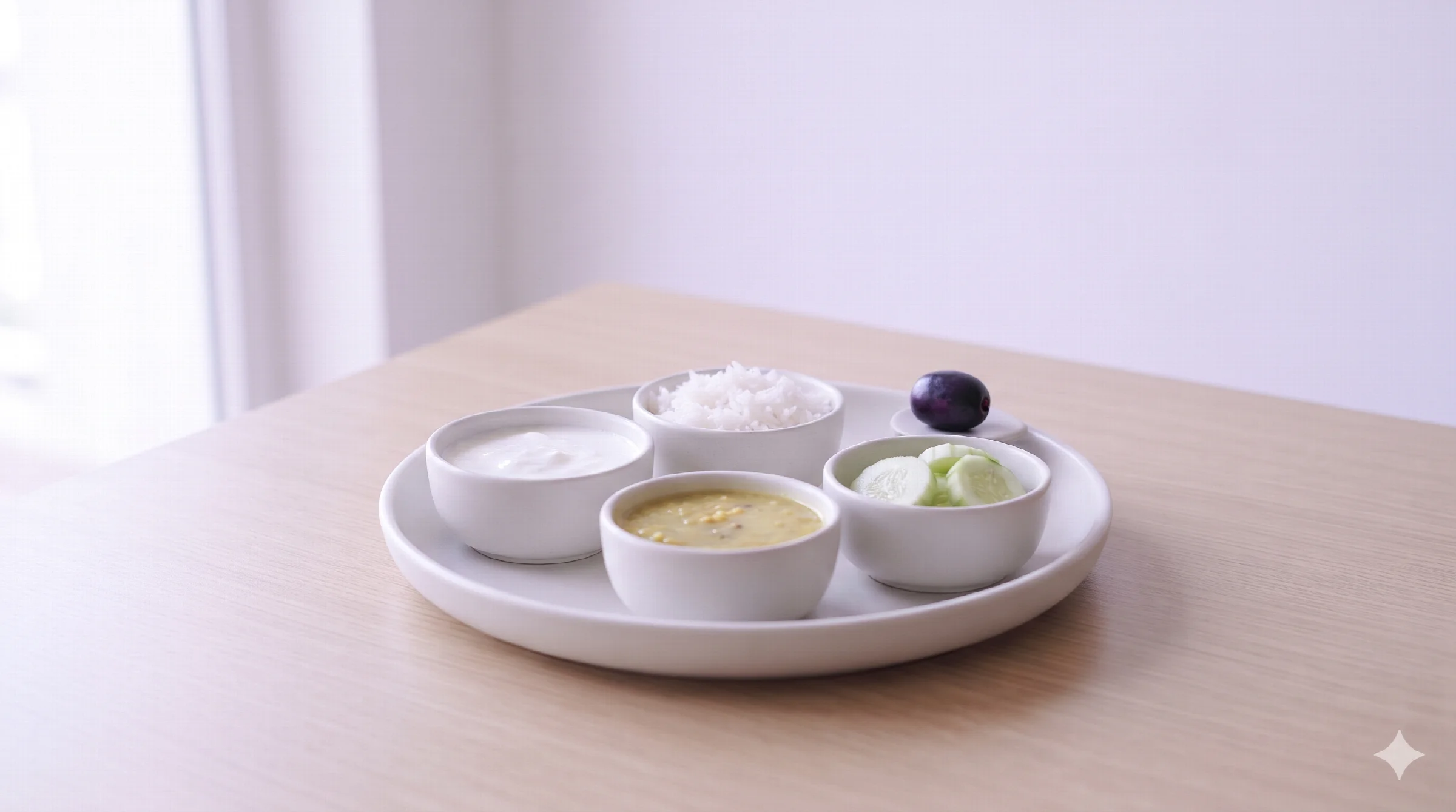
| First trimester | The baby's organs and nervous system are forming. Nausea, tiredness and food dislikes are common | Folate, small frequent meals, enough fluids, foods you can keep down | Dry toast or khakhra in the morning, poha, upma, curd rice, coconut water, lemon water, fruit, soft khichdi |
| Second trimester | The baby grows steadily and the appetite often returns. Blood volume rises | Iron, protein, calcium and fibre | Dal, rajma, chana, paneer, curd, eggs or fish if you eat them, green leafy vegetables, ragi, seasonal fruits, a small handful of nuts |
| Third trimester | The baby gains weight quickly, and acidity, constipation and swelling can increase | Protein, calcium, iron, fibre and smaller, lighter meals | Smaller meals spread through the day, buttermilk, sprouts cooked well, whole grain rotis, vegetable soups, milk or curd, fruits for fibre |
Our guides on protein foods, fruits and vegetables and the vegetarian IVF diet give more food ideas that also suit pregnancy.
Nutrients That Matter Most
- Folate and vitamins. Folate supports the baby's early nervous system. Take the vitamins your doctor prescribes. Our guide on folic acid and fertility vitamins explains why.
- Iron. Anaemia is common in Indian women and needs more care in pregnancy. Green leafy vegetables, dal, jaggery in small amounts, dates and meat for non-vegetarians help, along with the iron tablets your doctor advises. Our guide on anaemia and iron explains more.
- Protein. Dal, pulses, paneer, curd, milk, soy, eggs, fish and chicken support the baby's growth.
- Calcium. Milk, curd, paneer, ragi and sesame support bones.
- Fibre and fluids. Whole grains, vegetables, fruits and plenty of water help prevent constipation.
Foods to Limit or Avoid
- Raw or undercooked meat, fish and eggs
- Unpasteurised milk and soft cheese made from it
- Alcohol and all tobacco, including gutka and pan masala
- Too much tea and coffee. Our guide on chai, coffee and fertility explains caffeine
- Street food that is not freshly cooked or stored safely. Our guide on eating street food safely helps
- Very sugary sweets, sugary drinks and deep-fried snacks in large amounts
- Herbal mixtures and home remedies not checked by your doctor
Handling Common Food Challenges
Option A: Early nausea and food dislikes Eat small amounts often, keep dry snacks by the bed, sip fluids between meals and avoid strong smells. It is normal to eat less in the early weeks if you are keeping fluids down. Our guide on morning sickness in an IVF pregnancy explains when to call your doctor.
Option B: Later acidity, constipation and blood sugar Eat smaller meals, avoid lying down soon after eating, add fibre and water, and limit fried and spicy food at night. If you are told your blood sugar is high, a doctor or dietitian will plan your meals. Our guide on gestational diabetes in an IVF pregnancy explains this.
Women carrying twins may need more food and closer follow-up, as our guide on twin pregnancy after IVF explains.
Support at Home
Partners and family can help by cooking simple, fresh meals, keeping healthy snacks at hand and gently protecting the mother from too much food pressure. Our guide on supporting your partner during pregnancy after IVF has more ideas. If worry about food or the baby feels heavy, our guide on anxiety in pregnancy after IVF may help.
Worth Remembering
- An IVF pregnancy needs a normal, balanced pregnancy diet.
- Eating for two does not mean eating double.
- Take the vitamins and iron your doctor prescribes.
- Avoid raw or undercooked foods, alcohol and tobacco, and limit tea, coffee and sugar.
- Ask your doctor or a dietitian if you have diabetes, thyroid problems or twins.
Myths and Facts
| Myth | Fact |
|---|---|
| An IVF pregnancy needs a special diet | The same balanced pregnancy diet suits IVF and natural pregnancies |
| You must eat for two | Your needs rise slowly, mostly in the later months. Quality matters more than quantity |
| Lots of ghee helps the baby and makes delivery easier | Ghee is fine in normal amounts, but large amounts add weight without extra benefit |
| All papaya and pineapple must be completely avoided | Unripe papaya is usually avoided. Ask your doctor about ripe fruits in normal amounts |
| Eating saffron or certain foods will change the baby's skin colour | Skin colour depends on genes, not food |
Warning signs: please speak to a doctor soon if you notice
- Vomiting so often that you cannot keep fluids down, or very little urine
- Severe belly pain, bleeding or leaking fluid from the vagina
- Severe headache, blurred vision or sudden swelling of the face and hands
- Feeling very weak, breathless or dizzy
- Very low mood or worry that does not lift. Please tell someone you trust or a doctor straight away if you have thoughts of self-harm
Please do not start or stop any medicine on your own.
When to Speak to Your Doctor
Please speak to your obstetrician or fertility doctor if:
- You cannot eat or drink enough because of nausea
- You have diabetes, thyroid problems, high blood pressure or anaemia
- You are carrying twins or more
- You follow a special diet, such as vegan or fasting for religious reasons
- You want to take any supplement, herbal mixture or home remedy
Our guides on early pregnancy after IVF, pregnancy scans after IVF and breastfeeding after IVF explain the journey ahead. You can find your nearest Samarth IVF centre on our centres page, or reach us through the contact page.
"Good food in pregnancy is simple, fresh and made with love, not full of rules and fear."
Frequently Asked Questions
Is the diet after IVF pregnancy different from a normal pregnancy? No. Once the pregnancy is growing, the same balanced pregnancy diet suits IVF and natural pregnancies.
What should I eat in the first trimester after IVF? Small, frequent meals that you can keep down, such as poha, curd rice, khichdi, fruit and enough fluids, along with the vitamins your doctor prescribes.
Do I need to eat for two? No. Your needs rise slowly, mostly in the later months. Focus on good-quality food rather than large amounts.
Can I eat papaya during pregnancy after IVF? Unripe papaya is usually avoided. Please ask your doctor about ripe papaya and other fruits in normal amounts.
Can I drink tea or coffee in pregnancy? Small amounts are usually fine. Limit them, and ask your doctor what amount suits you.
Is ghee good during pregnancy? Ghee is fine in normal amounts as part of a balanced diet. Large amounts add extra weight without extra benefit.
Should I take extra supplements because it is an IVF pregnancy? Take only what your doctor prescribes. Please do not add supplements or herbal mixtures on your own.
What if I have gestational diabetes? Your doctor or a dietitian will plan your meals and may adjust treatment. Regular checks help keep you and the baby healthy.
This article is for general education only and is not a substitute for a medical consultation. Suitability and response to any treatment vary between individuals.